Georges Méliès: Film Director & Cinematic Visionary
Georges Méliès: The Magician of Cinema and Pioneer of Special Effects
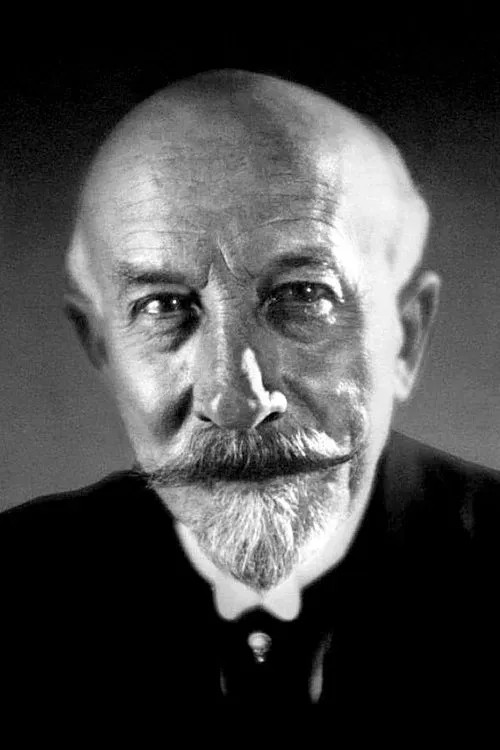
Georges Méliès, a name synonymous with the dawn of cinema, stands as a titan in film history. More than just a director, he was an illusionist, actor, stage designer, and technician, a true polymath who single-handedly transformed the fledgling art of motion pictures into a realm of fantasy and wonder. Active during the pivotal years of 1900-1909, Méliès pioneered narrative film and established many of the cinematic techniques we take for granted today, including special effects, dissolves, multiple exposures, and hand-painted color. This biography explores the life and legacy of this cinematic magician, whose groundbreaking work laid the foundation for modern filmmaking.
1. Introduction & Early Life
Born Marie-Georges-Jean Méliès on December 8, 1861, in Paris, France, his early life was steeped in the world of performance and artistry. His father, Jean-Louis-Stanislas Méliès, was a shoemaker who built a successful boot factory, ensuring a comfortable middle-class upbringing for Georges. This affluence allowed Méliès access to a quality education, attending the prestigious Lycée Michelet. However, his academic pursuits were often overshadowed by his burgeoning interest in drawing and stagecraft.
Early Exposure to Art and Performance
Even at a young age, Méliès demonstrated a remarkable talent for drawing, often embellishing his school books with intricate sketches and caricatures. This artistic flair would later prove invaluable in his film work. He excelled in technical drawing, a skill that later aided him in designing his elaborate sets and innovative special effects. His love for theatre was ignited early, fueled by regular visits to Parisian theaters and a deep fascination with stage magic and illusions.
Transition to Showmanship
After completing his formal education, Méliès was expected to join the family boot-making business. He reluctantly worked at the factory for a period, but his heart lay elsewhere. During his time in the military (fulfilling his mandatory service), his talent for entertainment shone. He often entertained his fellow soldiers with magic tricks and improvisational performances, honing his skills and solidifying his desire to pursue a career in the world of entertainment.
Acquiring the Théâtre Robert-Houdin
Following his military service and a brief stint managing the family business’s London branch, Méliès convinced his father to allow him to pursue his artistic passions. In 1888, he sold his share of the family business to his brothers and used the proceeds to purchase the Théâtre Robert-Houdin, a renowned magic theater founded by the famous French magician Jean-Eugène Robert-Houdin. This acquisition marked a turning point in Méliès's life, providing him with the platform and resources to fully immerse himself in the world of magic, illusions, and theatrical spectacle.
2. Directorial Style & Signature Techniques
Georges Méliès's directorial style was deeply rooted in his theatrical background, characterized by elaborate stage designs, theatrical acting, and a focus on visual spectacle. He saw cinema not as a medium for capturing reality, as the Lumière brothers did, but as a canvas for creating fantastical worlds and illusions. His signature techniques, born out of both artistic vision and necessity, revolutionized filmmaking and laid the groundwork for the special effects industry.
Theatrical Influences
Méliès’s films were essentially filmed stage plays. He employed a proscenium arch framing, placing the camera in a fixed position facing the stage. Characters entered and exited the frame as they would on a stage. His actors, often borrowed from the Théâtre Robert-Houdin, delivered exaggerated, theatrical performances. This theatrical approach, while seemingly simple by today's standards, was revolutionary at the time, establishing narrative cinema as distinct from simple documentaries.
Pioneering Special Effects
Méliès's greatest contribution to cinema was his innovative use of special effects. He stumbled upon many of these techniques accidentally, like the "stop trick" – discovered when his camera jammed during filming, creating the illusion of objects disappearing and reappearing. He also perfected techniques like multiple exposures (superimposing images on the same film), dissolves (gradually fading one image into another), and split screens (dividing the frame to show multiple scenes simultaneously). He used these techniques not just for novelty, but to create fantastical creatures, impossible transformations, and otherworldly environments.
Hand-Painted Color
Beyond his in-camera effects, Méliès further enhanced the visual appeal of his films through hand-painted color. Frame by frame, skilled artisans painstakingly applied vibrant colors to the black-and-white film, adding another layer of visual extravagance to his productions. This laborious process, though time-consuming, resulted in films that were visually stunning and unique for their time.
Narrative Structure & Storytelling
While his films were visually driven, Méliès also understood the importance of narrative. He moved beyond the simple documentation of events favored by other early filmmakers and began crafting stories, often inspired by fairy tales, literature, and current events. His narratives, though often simple, provided a framework for his visual spectacle and allowed audiences to engage with his films on a deeper level.
3. Major Films & Career Highlights
Georges Méliès's prolific career spanned over a decade, during which he directed, produced, and acted in hundreds of films. While many of these have been lost or remain obscure, several stand out as landmarks in film history, showcasing his innovative techniques and imaginative storytelling. These films cemented his reputation as a pioneer of cinematic fantasy and special effects.
Le Manoir du Diable (The House of the Devil) (1896)
Often considered the first horror film, Le Manoir du Diable is a short, whimsical piece featuring a bat that transforms into Mephistopheles. While not terrifying by modern standards, its use of supernatural themes, inventive special effects (such as the bat transformation), and lighthearted tone established a template for horror-comedy that would be explored in later films. It demonstrated Méliès’s early understanding of using cinema to create worlds beyond the everyday.
L'Affaire Dreyfus (The Dreyfus Affair) (1899)
A series of short films reconstructing the Dreyfus Affair, a highly controversial political scandal in France. While lacking the fantastical elements of his more famous works, L'Affaire Dreyfus demonstrates Méliès's willingness to engage with contemporary issues and his ability to use cinema for narrative storytelling beyond pure spectacle. It's a significant example of early historical reconstruction in film.
Cendrillon (Cinderella) (1899)
Méliès’s adaptation of the classic fairy tale, Cendrillon, is a lavish production filled with elaborate sets, costumes, and special effects. The film showcases his mastery of multiple exposures and dissolves, creating visually stunning transformations and magical sequences. Its success further solidified his reputation as a master of cinematic fantasy.
Le Voyage dans la Lune (A Trip to the Moon) (1902)
Without a doubt, Méliès's most famous and influential film, Le Voyage dans la Lune, is a landmark achievement in cinematic history. Inspired by Jules Verne's "From the Earth to the Moon" and H.G. Wells's "The First Men in the Moon," the film tells the story of a group of astronomers who travel to the moon in a cannon-propelled capsule. The iconic image of the capsule hitting the Man in the Moon's eye is one of the most recognizable in early cinema. Le Voyage dans la Lune is a showcase of Méliès's innovative special effects, elaborate set designs, and imaginative storytelling. Its international success solidified his reputation as a cinematic visionary.
Le Voyage à travers l'Impossible (An Impossible Voyage) (1904)
Another ambitious science fiction film, Le Voyage à travers l'Impossible, follows a group of explorers who embark on a fantastical journey to the sun. The film features a series of incredible contraptions and visual gags, showcasing Méliès's boundless imagination and his continued experimentation with special effects. It's a testament to his commitment to pushing the boundaries of what was possible in early cinema.
Later Career and Decline
Despite his early success, Méliès's career began to decline in the late 1900s. The rise of more sophisticated filmmaking techniques and the emergence of larger film studios with more resources put him at a disadvantage. He struggled to adapt to the changing landscape of the film industry, and his films began to lose their appeal. By the 1920s, he was largely forgotten, his contributions to cinema overshadowed by the advancements of others. He even had to sell the Théâtre Robert-Houdin. It wasn't until the rediscovery of his films in the 1930s that his legacy was truly appreciated.
4. Collaborations & Influence
While Méliès was largely a one-man operation, handling most aspects of filmmaking himself, he did collaborate with a small circle of actors and technicians. His wife, Eugénie Génin, played a crucial role, often appearing in his films and assisting with costume design and other production tasks. His actors, often drawn from the Théâtre Robert-Houdin, were accustomed to his theatrical style and contributed to the exaggerated performances that characterized his films. He also relied on skilled artisans to hand-paint the color onto his films.
Influence on Early Filmmakers
Méliès's influence on early filmmakers was profound. His innovative use of special effects and his focus on narrative storytelling inspired a generation of filmmakers to explore the possibilities of cinema beyond simple documentation. Early filmmakers like Edwin S. Porter (The Great Train Robbery) were undoubtedly influenced by Méliès's techniques, incorporating elements of fantasy and spectacle into their own work. His work demonstrated the potential of film to create illusion and fantasy.
Pathé Frères and Star Film
Initially, Méliès purchased equipment from Charles Pathé. Later, in order to combat Pathé's practice of bootlegging copies of his films in America, Méliès opened a branch of Star Film in New York, with his brother Gaston Méliès in charge. Gaston produced films there, mostly Westerns. This act of opening his own film distribution in the U.S. was a bold move, showing a shrewd business sense that was ahead of its time.
5. Awards & Recognition
During his active filmmaking years, Méliès did not receive widespread formal awards or recognition in the modern sense. The concept of film awards was still nascent at the time. However, his films were commercially successful and enjoyed widespread popularity, bringing him significant recognition among audiences and within the film industry of the early 1900s.
Later-Life Honors
In the latter part of his life, after rediscovery, Méliès received belated but significant recognition for his pioneering contributions to cinema. In 1931, he was awarded the Legion of Honour by the French government, a prestigious award acknowledging his significant cultural contributions. This award signaled a reevaluation of his importance in film history and helped to cement his legacy.
Documentaries and Tributes
Many documentaries and biographical films have been made about Méliès's life and work, further solidifying his place in film history. These films have helped to introduce his work to new generations of audiences and have ensured that his contributions to cinema are not forgotten. Martin Scorsese's 2011 film, *Hugo*, also served as a touching fictional tribute to Méliès.
6. Cultural Impact & Legacy
Georges Méliès's cultural impact is immeasurable. He is widely regarded as one of the founding fathers of narrative film and a pioneer of special effects. His innovative techniques and imaginative storytelling transformed cinema from a simple recording device into a powerful medium for artistic expression. His films continue to inspire filmmakers and artists today.
The Birth of Special Effects
Méliès's most enduring legacy is his pioneering work in special effects. He demonstrated the power of cinema to create illusions and fantastical worlds, paving the way for the sophisticated special effects techniques used in modern filmmaking. Without Méliès, many of the visual spectacles we enjoy in contemporary cinema would not be possible.
A Lasting Influence
Méliès's influence can be seen in the works of countless filmmakers, from early pioneers like Edwin S. Porter to contemporary directors like Terry Gilliam and Jean-Pierre Jeunet. His films continue to be screened and studied in film schools around the world, inspiring new generations of filmmakers to explore the creative possibilities of cinema.
Preservation and Restoration
Efforts to preserve and restore Méliès's films continue to this day. Many of his films have been meticulously restored, allowing audiences to experience them as they were originally intended. These efforts ensure that his legacy will continue to inspire and entertain for generations to come. His dedication to visual storytelling and his unwavering belief in the power of cinema continue to resonate with audiences around the world, making him a true magician of the movies.