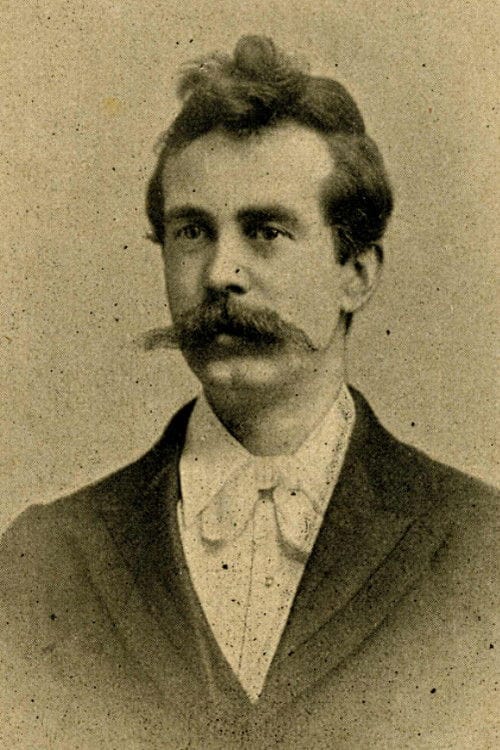
Filoteo Alberini: Film Director & Cinematic Visionary
Filoteo Alberini: A Pioneer of Italian Cinema
Introduction & Early Life
Filoteo Alberini (1865-1937) stands as a monumental figure in the nascent years of Italian cinema. While often overshadowed by later Italian directors, Alberini was a true pioneer, instrumental in establishing the infrastructure and aesthetics of filmmaking in Italy during the crucial 1900-1909 period. He was not merely a director; he was an innovator, an entrepreneur, and a visionary who laid the groundwork for the thriving Italian film industry that would follow. To understand Alberini's importance, one must delve into the chaotic and exciting atmosphere of early cinema, a time of experimentation, rapid technological advancements, and a growing public fascination with the moving image.
Born in Ortona dei Marsi, Abruzzo, Italy, Alberini's early life provided little indication of the path he would eventually forge. Information regarding his childhood is scarce, shrouded in the relative obscurity that often befalls individuals from the dawn of the cinematic age. However, it is known that he possessed a keen interest in technology and mechanics, characteristics that would prove vital to his future endeavors. He demonstrated a practical aptitude, a desire to understand how things worked, and a willingness to tinker and experiment – qualities that set him apart from many of his contemporaries.
His early career involved working as a mechanic and inventor, further honing his technical skills. This practical background proved invaluable when he turned his attention to the emerging field of motion pictures. Unlike some filmmakers who came from theatrical backgrounds, Alberini approached filmmaking with an engineer's mindset. He was interested in the mechanics of the camera, the process of developing film, and the challenges of projecting images onto a screen. This technical foundation underpinned his directorial vision, allowing him to push the boundaries of what was possible with the technology of the time.
Alberini's journey into cinema was spurred by a combination of technological curiosity and entrepreneurial spirit. He recognized the potential of the moving image to entertain and inform, and he was determined to be at the forefront of this burgeoning industry. This entrepreneurial spirit, combined with his technical expertise, would lead him to establish one of Italy's first film production companies, setting the stage for his groundbreaking contributions to cinematic history.
Directorial Style & Signature Techniques
Given the limitations of early cinema technology, Filoteo Alberini's directorial style was characterized by a pragmatic yet innovative approach. He wasn't driven by grand artistic pronouncements or theoretical manifestos, but rather by a desire to tell clear, engaging stories using the tools available to him. His work reflects a focus on narrative clarity, visual simplicity, and a reliance on established theatrical conventions adapted for the screen.
One of Alberini's signature techniques was his meticulous attention to detail in recreating historical settings and events. He understood the power of authenticity in engaging audiences, and he went to great lengths to ensure the accuracy of costumes, sets, and props. This commitment to historical realism was particularly evident in his epic historical dramas, which were popular with audiences and helped to establish a genre that would become a staple of Italian cinema.
Alberini's style also involved a relatively static camera, typical of the era. However, within those limitations, he experimented with framing and composition to enhance the storytelling. He understood the importance of visual storytelling and used careful staging and blocking to guide the audience's eye and create dramatic impact. While sophisticated camera movements were not yet feasible, Alberini leveraged the limited techniques at his disposal to create visually compelling scenes.
Furthermore, Alberini embraced theatrical acting styles, which were common in early silent films. Actors employed exaggerated gestures and facial expressions to convey emotions and actions to the audience. While this style may seem melodramatic to modern viewers, it was essential for communicating narrative information in the absence of synchronized sound. Alberini’s direction would help temper this over-acting as film technology developed.
Another important aspect of Alberini's directorial style was his focus on accessibility. He aimed to create films that would appeal to a broad audience, regardless of their social class or educational background. He often incorporated elements of popular culture, such as historical anecdotes and patriotic themes, to resonate with the Italian public. This emphasis on accessibility helped to popularize cinema and establish it as a mainstream form of entertainment.
Finally, it's crucial to remember the context of filmmaking at the time. Alberini was working with rudimentary equipment, limited resources, and a nascent understanding of cinematic language. His achievements should be viewed in light of these constraints. He was not simply making movies; he was helping to define what movies could be.
Major Films & Career Highlights
Filoteo Alberini's career was marked by a series of groundbreaking films that helped to shape the early landscape of Italian cinema. While many of his works are now lost or exist only in fragments, those that survive offer valuable insights into his directorial talent and his contributions to the development of cinematic language.
*La Presa di Roma* (The Capture of Rome, 1905)
Arguably Alberini's most significant contribution is *La Presa di Roma* (The Capture of Rome). This film is widely considered to be the first feature-length film produced in Italy and a pivotal work in the history of Italian cinema. It depicted the capture of Rome by Italian troops in 1870, a key event in the unification of Italy. The film was a patriotic spectacle that resonated deeply with Italian audiences and helped to solidify Alberini's reputation as a major filmmaker. *La Presa di Roma* showcased Alberini's talent for recreating historical events on screen and his ability to engage audiences with nationalistic themes. It was a commercial success and a critical milestone in establishing the viability of feature-length filmmaking in Italy. The film used a combination of staged scenes and archival footage to tell its story, showcasing Alberini's understanding of cinematic techniques for historical narrative.
Other Notable Works
Although *La Presa di Roma* remains his most celebrated work, Alberini directed a number of other significant films during his career. These included historical dramas, comedies, and adaptations of literary works. While specific details about these films are often scarce, their existence demonstrates Alberini's prolific output and his willingness to experiment with different genres.
His filmography, though incomplete, suggests a director deeply engaged with the cultural and political landscape of his time. He used cinema to explore Italian history, celebrate national identity, and entertain audiences with engaging stories. While his films may not possess the technical sophistication of later works, they are significant for their historical context and their contribution to the development of Italian cinematic conventions.
It is important to note that the preservation of early cinema is a challenging endeavor, and many films from this period have been lost due to neglect, deterioration, or accidental destruction. The fact that *La Presa di Roma* has survived is a testament to its historical importance and its enduring appeal. Efforts are ongoing to locate and restore other films from Alberini's career, which would provide a more complete picture of his contributions to Italian cinema.
Beyond the films themselves, Alberini's greatest contribution might be the infrastructure he helped to establish. He didn't just direct; he built studios, trained technicians, and cultivated a film-going audience. He was a pioneer in every sense of the word.
Collaborations & Influence
Filoteo Alberini's influence extended beyond his own directorial efforts. He was a collaborator and a mentor who played a crucial role in shaping the early Italian film industry. As the founder of Cines, one of Italy's first and most important film production companies, Alberini fostered a collaborative environment that nurtured the talents of numerous filmmakers, actors, and technicians.
While specific names and details of his collaborations are often difficult to ascertain from historical records, it is clear that Alberini worked with a diverse group of individuals who contributed to the success of his films. He assembled a team of skilled technicians, including cinematographers, set designers, and costume designers, who helped to bring his visions to life on screen. He also worked with a cast of talented actors who embraced the theatrical acting style that was prevalent in early silent films.
Alberini's influence can be seen in the work of subsequent Italian filmmakers who built upon his pioneering efforts. He helped to establish a tradition of historical epics and melodramatic narratives that would become hallmarks of Italian cinema. His emphasis on visual storytelling and his commitment to historical accuracy also influenced later generations of filmmakers.
Moreover, Alberini's entrepreneurial spirit inspired others to invest in the Italian film industry. His success demonstrated the potential of cinema as a commercial enterprise and encouraged the development of new production companies and distribution networks. He laid the foundation for the thriving Italian film industry that would emerge in the decades following his pioneering work.
Though the details of specific collaborations might be sparse, the impact of Cines and Alberini's overall influence is undeniable. He fostered a creative and technical environment that allowed the Italian film industry to take root and flourish. He served as a role model for aspiring filmmakers and helped to shape the aesthetics and conventions of early Italian cinema.
Awards & Recognition
In the early years of cinema, formal awards and recognition systems were not as prevalent as they are today. However, Filoteo Alberini's contributions were acknowledged and celebrated during his lifetime through various forms of recognition.
One form of recognition was the commercial success of his films. *La Presa di Roma*, in particular, was a major box office hit and helped to establish Alberini as a leading filmmaker in Italy. The film's popularity demonstrated its appeal to a wide audience and solidified Alberini's reputation as a director who could deliver commercially viable entertainment.
Furthermore, Alberini's work was praised by critics and commentators who recognized his pioneering role in the development of Italian cinema. While formal film reviews were not as common as they are today, articles and essays in newspapers and magazines acknowledged Alberini's contributions to the art form. He was often lauded for his technical expertise, his ability to tell compelling stories, and his commitment to historical accuracy.
In more recent years, Alberini's legacy has been further recognized through retrospective screenings, film festivals, and scholarly publications. His films have been restored and preserved, allowing new generations of audiences to appreciate his groundbreaking work. Film historians have also highlighted Alberini's importance in the development of Italian cinema, recognizing his role as a pioneer and an innovator.
While Alberini may not have received formal awards in the modern sense, his contributions were widely acknowledged during his lifetime and have been increasingly recognized in the years since his death. His legacy as a pioneer of Italian cinema is secure, and his films continue to be studied and celebrated for their historical significance and their artistic merit.
Cultural Impact & Legacy
Filoteo Alberini's cultural impact extends far beyond the specific films he directed. He was a catalyst for the development of Italian cinema, helping to transform it from a novelty into a mainstream form of entertainment. His contributions shaped the aesthetics, conventions, and infrastructure of the early Italian film industry, leaving a lasting legacy that continues to influence filmmakers today.
One of Alberini's most significant contributions was his role in popularizing cinema in Italy. His films appealed to a broad audience, helping to establish a film-going culture that would continue to thrive in the decades to come. He demonstrated the potential of cinema to entertain, inform, and engage with audiences, paving the way for the growth of the Italian film industry.
Alberini also helped to establish certain genres and themes that would become staples of Italian cinema. His historical epics, in particular, set a precedent for later films that explored Italian history and celebrated national identity. He also contributed to the development of melodramatic narratives that resonated with audiences and helped to define the emotional tone of early Italian cinema.
Beyond his specific films, Alberini's legacy lies in his pioneering spirit and his commitment to innovation. He was not afraid to experiment with new techniques and technologies, and he helped to push the boundaries of what was possible in early cinema. He served as a role model for aspiring filmmakers and inspired them to pursue their own creative visions.
In conclusion, Filoteo Alberini was more than just a film director; he was a visionary, an entrepreneur, and a cultural force who helped to shape the early landscape of Italian cinema. His contributions continue to be celebrated and studied, ensuring that his legacy as a pioneer of Italian film will endure for generations to come. He provided a foundational understanding for Italian film, without which the greats of Neorealism and beyond would never have reached their potential.