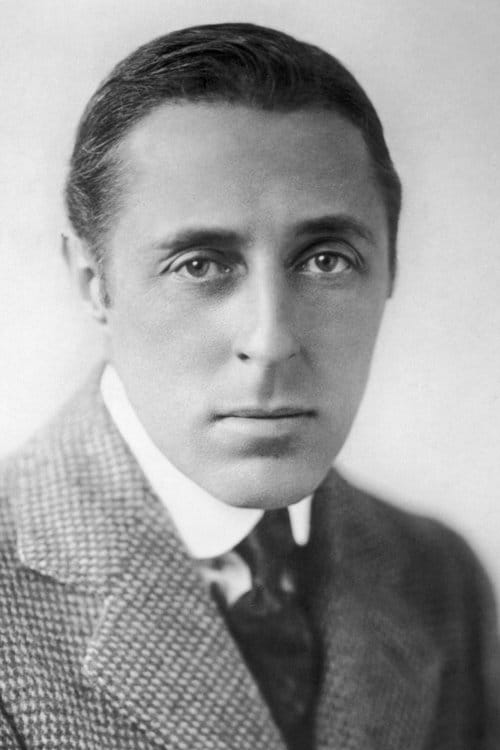
D.W. Griffith: Film Director & Cinematic Visionary
D.W. Griffith: A Pioneer of Cinema and Controversial Figure
David Wark Griffith, more famously known as D.W. Griffith, stands as a monumental, albeit complex, figure in the history of cinema. Born on January 22, 1875, in La Grange, Kentucky, Griffith's early life was steeped in the romanticized narratives of the Old South. His father, Jacob Wark Griffith, was a former Confederate Army colonel and a storyteller who instilled in young David a deep appreciation for history, particularly the narratives surrounding the Civil War. This upbringing would profoundly shape his worldview and, consequently, his filmmaking.
Griffith’s early years were marked by financial hardship following his father's death when he was ten. He left school to help support his family, working various jobs, including a stint as a bookstore clerk. This exposed him to a wide range of literature, further fueling his imagination and ambition. He aspired to be a playwright and actor, touring with various theater companies, but found limited success. He eventually turned to writing plays, though these too failed to garner significant attention. This period of struggle, however, was not without its value, as it provided him with firsthand experience in storytelling and performance, skills that would later prove invaluable in his transition to filmmaking.
It was in 1907 that Griffith first entered the burgeoning world of motion pictures. Seeking to sell one of his plays as a film scenario, he instead found himself cast as an actor for the Edison Manufacturing Company. He quickly realized the potential of this new medium and, within a year, secured a position as a director at the Biograph Company. This marked the true beginning of his cinematic journey, a journey that would revolutionize filmmaking techniques and establish many of the conventions we still recognize today. Little did anyone know that this relatively unknown man would shape the language of film as we know it, for better and, tragically, for worse.
Directorial Style & Signature Techniques
D.W. Griffith is credited with pioneering many cinematic techniques that are now considered fundamental to filmmaking. His contributions were transformative, shifting cinema from static, theatrical presentations to a dynamic and expressive art form. He understood the power of the camera to manipulate time, space, and emotion, and he relentlessly experimented with new ways to engage the audience.
Innovations in Cinematography and Editing
Griffith's most notable contributions lie in his mastery of camera techniques and editing. He wasn't the *inventor* of all of these techniques, but he significantly popularized and refined them, integrating them seamlessly into his storytelling. He championed the use of close-ups, allowing audiences to connect with characters on a more personal level and conveying subtle emotional nuances. He also utilized medium shots and long shots to establish context and create a sense of scale. He understood how each shot could evoke different feelings and contribute to the overall narrative.
Griffith was a master of parallel editing (cross-cutting), interweaving different storylines or actions happening simultaneously to build suspense and create dramatic irony. This technique, which he perfected, allowed him to tell complex stories with multiple plot threads, keeping the audience engaged and invested in the outcome. He also employed flashbacks and flashforwards, manipulating the timeline to provide context and foreshadow future events.
Furthermore, Griffith was a pioneer in the use of moving camera shots, including tracking shots and panning shots, to follow the action and create a sense of dynamism. He understood that a static camera could be limiting and that movement could enhance the storytelling by drawing the audience into the scene. He also experimented with lighting, using it to create mood and atmosphere.
Narrative Structure and Melodrama
Griffith's directorial style was heavily influenced by melodrama, a theatrical style characterized by heightened emotions, dramatic conflicts, and clearly defined characters. He often told stories of romance, sacrifice, and redemption, appealing to the emotional sensibilities of his audience. His films often featured virtuous heroes and villainous antagonists, with a strong emphasis on moral themes. While often effective in drawing the audience in, this reliance on melodrama also contributed to some of the problematic aspects of his work, particularly his tendency to portray racial and ethnic groups in stereotypical and often offensive ways.
He also utilized the “last-minute rescue” trope, a dramatic device where the hero arrives just in the nick of time to save the day. This created intense suspense and provided a satisfying resolution for the audience. While these techniques were effective in creating engaging stories, they were sometimes criticized for being overly sentimental and manipulative. Nevertheless, Griffith's innovative techniques fundamentally changed the language of cinema and paved the way for future generations of filmmakers.
Major Films & Career Highlights
D.W. Griffith's filmography is extensive, encompassing hundreds of short films and several groundbreaking feature films. While his career is marred by controversy, particularly surrounding *The Birth of a Nation*, his contributions to cinematic history are undeniable. His major films showcase his technical innovations and his ability to tell compelling, albeit sometimes problematic, stories.
Early Biograph Shorts
During his tenure at Biograph (1908-1913), Griffith directed an astonishing number of short films – over 450! These shorts served as a laboratory for his experimentation with cinematic techniques. While many of these films are now obscure, they were crucial in developing his skills and establishing his signature style. Some notable early shorts include *The Adventures of Dollie* (1908), often cited as his directorial debut, and *A Corner in Wheat* (1909), which demonstrated his ability to use editing to create social commentary. These early films showcased his growing mastery of camera angles, editing techniques, and narrative structure, laying the foundation for his later, more ambitious projects.
The Birth of a Nation (1915)
*The Birth of a Nation* is undoubtedly Griffith's most controversial and arguably his most significant film. A sweeping epic about the American Civil War and Reconstruction, it was groundbreaking in its technical achievements, including its scale, battle sequences, and innovative use of montage. However, the film is also deeply racist, depicting African Americans in stereotypical and demeaning ways and glorifying the Ku Klux Klan as a heroic force. The film's blatant racism sparked widespread protests and condemnation upon its release. Despite its controversial content, *The Birth of a Nation* was a massive box office success and solidified Griffith's reputation as a cinematic visionary. It is essential to acknowledge both the film's technical brilliance and its repugnant racial ideology when considering its place in film history. This film brought him international attention for both positive and negative reasons.
Intolerance (1916)
In response to the criticism surrounding *The Birth of a Nation*, Griffith directed *Intolerance*, an ambitious and visually stunning epic that told four interconnected stories of intolerance throughout history: the fall of Babylon, the life of Christ, the St. Bartholomew's Day Massacre, and a modern-day American story. The film was a technical marvel, featuring elaborate sets and massive crowd scenes. While *Intolerance* was intended as a plea for understanding and tolerance, it was less commercially successful than *The Birth of a Nation*. However, it remains a significant work in Griffith's filmography, showcasing his ambition and his willingness to experiment with narrative structure and visual spectacle. It’s considered a response to accusations leveled against him for the overt racism present in *Birth of a Nation*.
Broken Blossoms (1919)
*Broken Blossoms* is a more intimate and emotionally resonant film than Griffith's earlier epics. It tells the story of a fragile young woman (Lillian Gish) who is abused by her brutal father and finds solace in the kindness of a Chinese immigrant (Richard Barthelmess). The film is notable for its sensitive performances and its poignant portrayal of human suffering. *Broken Blossoms* was a critical and commercial success, demonstrating Griffith's ability to create powerful and moving stories on a smaller scale. It is a testament to his range as a filmmaker and his capacity for empathy.
Later Career
While Griffith continued to make films throughout the 1920s and early 1930s, his later career never reached the heights of his earlier successes. He struggled to adapt to the changing tastes of the audience and the increasing competition from other filmmakers. Some of his later films include *Way Down East* (1920) and *Orphans of the Storm* (1921), both of which were successful but failed to match the impact of his earlier work. He directed his last film, *The Struggle*, in 1931. His later years were marked by financial difficulties and a growing sense of disillusionment with the film industry.
Collaborations & Influence
D.W. Griffith collaborated with a talented group of actors, cinematographers, and writers who contributed significantly to his films' success. He fostered a creative environment at Biograph and later at his own production company, allowing his collaborators to experiment and develop their skills.
Key Collaborators
One of Griffith's most important collaborators was actress Lillian Gish, who appeared in many of his films, including *The Birth of a Nation*, *Intolerance*, and *Broken Blossoms*. Gish was known for her expressive acting and her ability to convey a wide range of emotions. She became a muse for Griffith, and their collaboration resulted in some of the most memorable performances in early cinema. Another key collaborator was cinematographer Billy Bitzer, who worked with Griffith on over 100 films. Bitzer was responsible for the innovative camerawork that characterized Griffith's films, including his use of close-ups, moving camera shots, and lighting effects. Together, Gish and Bitzer played crucial roles in shaping Griffith's artistic vision.
Influence on Filmmakers
Griffith's influence on subsequent generations of filmmakers is undeniable. His pioneering techniques and his mastery of cinematic language paved the way for the development of modern cinema. Filmmakers such as Sergei Eisenstein, John Ford, and Orson Welles were all heavily influenced by his work. Eisenstein, in particular, admired Griffith's use of montage and his ability to create powerful emotional responses through editing. Ford, a master of the Western genre, drew inspiration from Griffith's epic storytelling and his use of landscape. Welles, known for his innovative camera work and his complex narratives, acknowledged Griffith as a major influence on his own filmmaking style. His impact can be seen in modern films today.
Awards & Recognition
While D.W. Griffith's career was marked by controversy, he also received numerous awards and recognition for his contributions to cinema. His technical innovations and his impact on filmmaking were widely acknowledged, even by those who criticized his controversial films.
Awards and Honors
In 1936, the Academy of Motion Picture Arts and Sciences awarded Griffith an Honorary Award for his contributions to the art of cinema. The citation read: "For his distinguished service in originating many basic motion picture techniques and his inspiration to the motion picture industry." This award recognized Griffith's pioneering work and his lasting impact on the development of filmmaking. Despite the controversies surrounding *The Birth of a Nation*, the Academy acknowledged his technical achievements and his role in shaping the language of cinema.
Griffith also received recognition from other organizations and institutions throughout his career. He was lauded for his artistic vision and his ability to create compelling and emotionally resonant stories. While the controversy surrounding *The Birth of a Nation* often overshadowed his other accomplishments, his contributions to cinema were ultimately recognized and celebrated.
Cultural Impact & Legacy
D.W. Griffith's cultural impact is complex and multifaceted. On one hand, he is celebrated as a pioneer of cinema, a visionary who revolutionized filmmaking techniques and established many of the conventions we still recognize today. On the other hand, he is criticized for his racist and problematic depictions of African Americans in *The Birth of a Nation*, a film that has been widely condemned for its perpetuation of harmful stereotypes and its glorification of the Ku Klux Klan.
Enduring Influence on Cinema
Despite the controversies surrounding his work, Griffith's influence on cinema is undeniable. His pioneering techniques, including his use of close-ups, parallel editing, and moving camera shots, transformed filmmaking from a static, theatrical presentation to a dynamic and expressive art form. He understood the power of the camera to manipulate time, space, and emotion, and he relentlessly experimented with new ways to engage the audience. His innovations paved the way for the development of modern cinema and continue to influence filmmakers today.
A Complex Legacy
However, Griffith's legacy is also deeply problematic. *The Birth of a Nation* remains a deeply offensive and harmful film, and its perpetuation of racist stereotypes cannot be ignored. The film's impact on American culture was profound, contributing to the resurgence of the Ku Klux Klan and reinforcing harmful attitudes towards African Americans. While Griffith later expressed regret for the film's racist content, his legacy remains tainted by its association with hate and intolerance. His contribution to film is important but inseparable from the historical impact of *Birth of a Nation.*
Ultimately, D.W. Griffith's legacy is one of both innovation and controversy. He was a brilliant filmmaker who revolutionized the language of cinema, but he was also a product of his time, and his work reflected the prejudices and biases of that era. His films continue to be studied and debated, and his legacy remains a complex and challenging one. Understanding his contribution to film requires acknowledging both the genius and the deeply problematic aspects of his work.