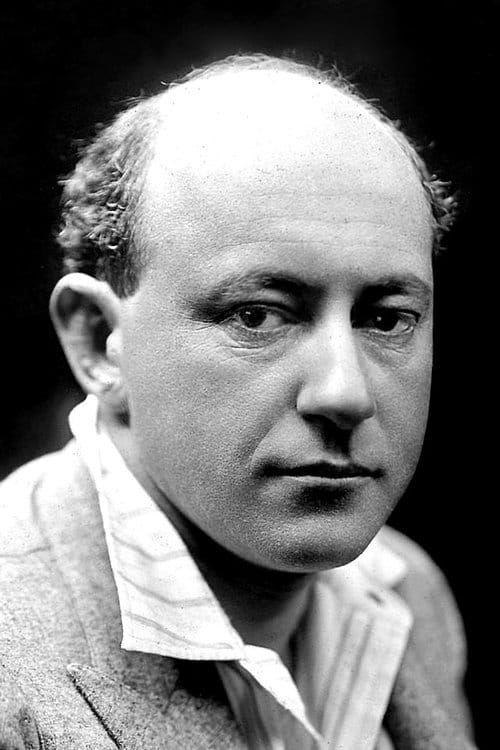
Cecil B. DeMille: Film Director & Cinematic Visionary
Cecil B. DeMille: The Pioneering Showman of Early Hollywood
Introduction & Early Life
Cecil Blount DeMille, a name synonymous with epic filmmaking, was a pivotal figure in the birth and development of Hollywood. Born on August 12, 1881, in Ashfield, Massachusetts, his early life was steeped in the world of arts and letters. His father, Henry Churchill DeMille, was a playwright and educator, while his mother, Matilda Beatrice Samuel, was also involved in theatrical endeavors. This upbringing naturally steered young Cecil towards a life in the dramatic arts.
DeMille's family background wasn't just creatively rich; it was also steeped in a progressive social consciousness. Henry Churchill DeMille was known for tackling societal issues in his plays, a trait that would later subtly manifest in Cecil's own work, even amidst the spectacle. Tragically, Henry died when Cecil was just 12 years old, leaving a lasting impact on the young boy and forcing him to mature quickly. This loss likely fueled his ambition and drive to succeed.
After his father's death, DeMille attended the American Academy of Dramatic Arts in New York City, honing his skills as an actor and stage manager. He initially aspired to a career on the stage, finding moderate success as a performer and playwright. He acted in various plays and even collaborated on writing projects. However, the burgeoning film industry soon captured his attention, promising a new canvas for storytelling and a wider audience reach than the stage could ever offer.
In the early 1910s, the film industry was still in its infancy, a chaotic but exciting landscape of experimentation and innovation. Sensing the potential of this new medium, DeMille, along with his business partner Jesse L. Lasky and two others, decided to venture west to California. They pooled their resources and formed the Jesse L. Lasky Feature Play Company, marking the beginning of DeMille's extraordinary journey as a filmmaker and a legend.
Directorial Style & Signature Techniques
Cecil B. DeMille's directorial style was defined by grand spectacle, lavish sets, and a keen understanding of popular taste. He wasn't merely a director; he was a showman, a master of visual storytelling who knew how to captivate audiences with his epic productions. He possessed an innate ability to translate historical and biblical narratives into compelling cinematic experiences.
One of DeMille's signature techniques was his meticulous attention to detail. He was known for his elaborate costumes, meticulously researched sets, and large casts, all contributing to the immersive quality of his films. He was a stickler for historical accuracy, often consulting with historians and scholars to ensure the authenticity of his productions, although this was often balanced with dramatic license for entertainment value.
DeMille also pioneered many filmmaking techniques that are still used today. He was an early adopter of location shooting, recognizing the value of filming in authentic environments to enhance the realism and grandeur of his films. He utilized innovative camera angles and editing techniques to create a dynamic and visually arresting experience for the viewer. His use of lighting was particularly noteworthy, often employing chiaroscuro effects to heighten the drama and create a sense of depth.
Beyond the visual spectacle, DeMille was adept at crafting compelling narratives that resonated with audiences. He often incorporated themes of morality, redemption, and the struggle between good and evil into his films, providing a deeper layer of meaning beneath the surface of the spectacle. While sometimes criticized for being heavy-handed in his moralizing, his stories consistently struck a chord with viewers, contributing to his enduring popularity.
He was also a master of crowd control, essential for directing the massive casts that populated his films. DeMille's sets were often bustling with hundreds, even thousands, of extras, and he possessed the organizational skills and commanding presence necessary to manage such large-scale productions. His ability to coordinate these complex scenes was a testament to his directorial skill and his vision for creating truly epic cinematic moments.
Major Films & Career Highlights
DeMille's career spanned several decades, during which he directed numerous films that became box office hits and critical successes. His early work was instrumental in shaping the language of cinema and establishing Hollywood as the entertainment capital of the world.
Early Silent Era: Shaping the Foundation
One of his earliest and most significant films was *The Squaw Man* (1914), considered one of the first feature-length films made in Hollywood. This western drama, shot in a barn near present-day Vine Street and Selma Avenue, established DeMille's reputation as a visionary filmmaker. *The Squaw Man* was a commercial success and helped to put Hollywood on the map as a filmmaking center.
Following *The Squaw Man*, DeMille directed a string of successful silent films, including *Carmen* (1915), *The Cheat* (1915), and *Joan the Woman* (1916). *The Cheat*, starring Sessue Hayakawa, was a particularly controversial film for its depiction of interracial relationships and its exploration of themes of desire and obsession. These films showcased DeMille's ability to handle complex narratives and create visually stunning images.
The Epic Silent Period
As the 1910s progressed, DeMille's ambitions grew, and he began to tackle increasingly larger-scale projects. *The Woman God Forgot* (1917) and *Old Wives for New* (1918) are examples of his evolving style towards historical epics, incorporating lavish sets and extravagant costumes.
Transition to Talkies & Beyond
While this historical biography focuses on his 1910-1919 contributions, it's crucial to acknowledge his later achievements. DeMille successfully transitioned to sound film, directing some of his most iconic and financially successful epics, including *The Sign of the Cross* (1932), *Cleopatra* (1934), *Samson and Delilah* (1949), *The Greatest Show on Earth* (1952), and *The Ten Commandments* (1956). These films solidified his reputation as the master of the epic genre and cemented his place in film history. However, his impact during the 1910s was foundational.
Collaborations & Influence
Cecil B. DeMille's success was not solely a product of his own vision; he relied on the talents and contributions of numerous collaborators throughout his career. He formed a particularly strong working relationship with Jesse L. Lasky, his business partner and co-founder of the Jesse L. Lasky Feature Play Company. Lasky's business acumen and DeMille's creative vision proved to be a winning combination, helping to establish their company as a major force in the industry.
DeMille also worked closely with a number of talented actors, including Sessue Hayakawa, who starred in *The Cheat*, and Geraldine Farrar, who played the title role in *Carmen*. He had a knack for recognizing and nurturing talent, and many of the actors who worked with him went on to have successful careers in their own right. He fostered a collaborative environment on set, encouraging his cast and crew to contribute their ideas and expertise to the production.
DeMille's influence on other filmmakers is undeniable. His pioneering work in the early days of Hollywood helped to establish many of the conventions and techniques that are still used today. He inspired countless directors to embrace the epic genre and to push the boundaries of cinematic storytelling. His films paved the way for the big-budget spectacles that have become a staple of Hollywood cinema. He set a new standard for visual storytelling and demonstrated the power of film to transport audiences to different times and places.
Awards & Recognition
While formal awards systems were less established during DeMille's early career (1910-1919), his films received significant recognition and acclaim within the industry and from audiences. His commercial success was a form of recognition in itself, proving his ability to connect with viewers and deliver entertainment that they wanted to see.
Though not always through formal awards, his contributions to the growth of Hollywood were undeniable. His pioneering work earned him the respect and admiration of his peers, and he was considered a leading figure in the filmmaking community. His name became synonymous with quality and innovation, and his films were eagerly anticipated by audiences around the world.
(It's worth noting that DeMille later received numerous awards for his later work, including an Academy Award for Best Picture for *The Greatest Show on Earth* and the Irving G. Thalberg Memorial Award, recognizing his outstanding contributions to the film industry.)
Cultural Impact & Legacy
Cecil B. DeMille's cultural impact is profound and enduring. He helped to shape the way we think about Hollywood and the power of cinema. His films captured the imagination of audiences around the world and contributed to the creation of a global entertainment industry.
His legacy extends beyond his individual films. He was a key figure in the development of Hollywood as a cultural center and a symbol of American ingenuity and creativity. He helped to establish the studio system and to create a framework for the production and distribution of films that continues to this day. His influence can be seen in countless films and television shows that have followed in his footsteps.
While his later works often overshadow his early silent film contributions, it was during the 1910-1919 era that he laid the groundwork for his future success and for the development of Hollywood as we know it. His pioneering spirit, his innovative techniques, and his unwavering commitment to entertainment helped to transform cinema into a powerful and influential art form. Even today, his name remains synonymous with epic filmmaking and the golden age of Hollywood, solidifying his position as a true legend of the silver screen.