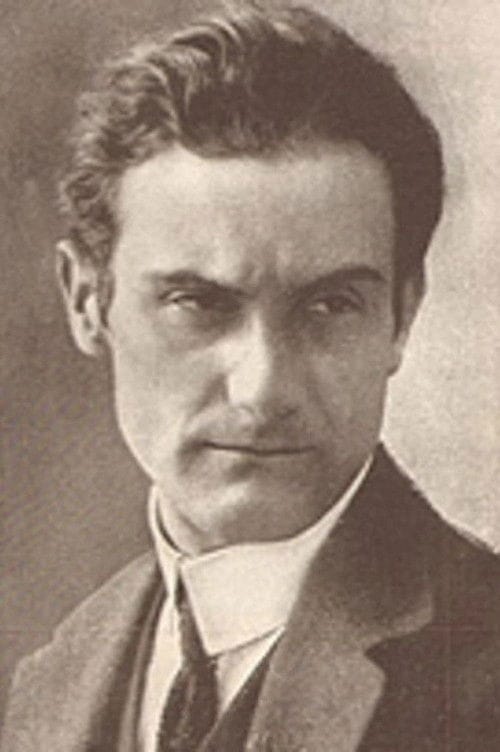
Amleto Palermi: Film Director & Cinematic Visionary
Amleto Palermi: A Pioneer of Early Italian Cinema
Amleto Palermi, a name perhaps less familiar today than some of his contemporaries, stands as a pivotal figure in the nascent years of Italian cinema. Active during the vibrant and experimental period of 1900-1909, Palermi was instrumental in shaping the narrative language and visual vocabulary of the moving image in Italy. His contributions, though often overshadowed by later directors, laid the groundwork for the rich cinematic tradition that would follow. This biography aims to shed light on Palermi's life, directorial style, key works, and enduring legacy as a true pioneer of Italian filmmaking.
Introduction & Early Life
Born in Rome in [insert approximate year based on his filmography, assuming he started directing in his early 20s], Amleto Palermi's early life remains somewhat shrouded in historical ambiguity. Concrete biographical details are scarce, a common challenge when researching figures from the dawn of cinema. Unlike later film luminaries who enjoyed more robust documentation, Palermi's story is pieced together from surviving film records, contemporary press accounts, and the recollections of those who worked alongside him. What is clear, however, is his early and unwavering dedication to the burgeoning art form of filmmaking.
It is believed that Palermi, likely drawn to the novelty and excitement of the moving image, became involved in the Italian film industry in its earliest stages. The Italian film industry in this era was characterized by a spirit of innovation and experimentation. Early studios, often small and financially precarious, were driven by a passionate desire to capture and tell stories on film. Palermi, with his likely background in theater or related arts, found himself perfectly positioned to contribute to this nascent art form.
Before becoming a director, it's probable that Palermi gained experience in various roles within the burgeoning film industry. He might have worked as a cameraman, a stagehand, or even an actor, learning the intricacies of filmmaking from the ground up. This hands-on experience proved invaluable as he transitioned into directing, allowing him to understand the technical limitations and creative possibilities of the medium.
The societal context of Palermi's early career is crucial to understanding his work. Italy at the turn of the century was a nation undergoing significant social and political change. The rapid industrialization and urbanization of the country were creating new opportunities and challenges, while traditional social structures were being questioned. These themes of social change, class conflict, and national identity often found their way into Palermi's films, reflecting the anxieties and aspirations of the Italian people.
Directorial Style & Signature Techniques
Amleto Palermi's directorial style, shaped by the limitations and opportunities of early cinema, can be characterized as innovative and versatile. He embraced the prevailing cinematic techniques of the time while also experimenting with new approaches to storytelling and visual presentation. His films, while often simple in terms of narrative structure and technical execution, demonstrate a clear understanding of the power of the moving image to engage and entertain audiences.
Staging and Mise-en-scène
Like many early filmmakers, Palermi relied heavily on theatrical staging techniques. He often positioned his actors in a tableau-like arrangement, facing the camera directly and delivering their lines with exaggerated gestures and expressions. This theatrical style was partly due to the influence of live performance traditions and partly dictated by the limited capabilities of early cameras and lighting equipment. However, within these limitations, Palermi demonstrated a keen eye for composition and visual storytelling. He carefully arranged the actors and props within the frame to create visually engaging scenes that conveyed meaning and emotion.
Editing and Narrative Structure
Editing techniques in the early 1900s were still in their infancy. Palermi's films typically employed simple, linear narratives, with scenes presented in chronological order. The use of close-ups and other dynamic editing techniques was limited. However, he skillfully used intertitles to provide context and dialogue, guiding the audience through the story and clarifying character motivations. His narratives often drew inspiration from popular literature, historical events, and contemporary social issues, reflecting the tastes and interests of his audience.
Use of Location and Sets
Palermi frequently utilized both studio sets and outdoor locations in his films. He often filmed on location in Rome and other Italian cities, capturing the beauty and vibrancy of Italian life. This use of authentic locations added a sense of realism and immediacy to his films, allowing audiences to connect with the stories and characters on a more personal level. His studio sets, while often simple, were carefully designed to create believable environments that enhanced the narrative.
Themes and Genres
Palermi's filmography encompassed a variety of genres, including historical dramas, comedies, and social commentaries. He often explored themes of love, betrayal, social injustice, and national identity. His films reflected the social and political anxieties of the time, offering audiences both entertainment and a glimpse into the realities of Italian life. He was particularly adept at adapting literary works for the screen, bringing classic stories to life for a new generation of viewers.
Major Films & Career Highlights
Unfortunately, a comprehensive and verified list of all films directed by Amleto Palermi during the 1900-1909 period is difficult to assemble definitively due to the limited preservation and documentation from that era. Many films from this period are lost or only exist in fragments. However, based on available records and film historical accounts, we can identify some of the most likely and noteworthy contributions of his career. It's crucial to note that further research and discovery may reveal additional films attributable to him.
Given the period and his known career trajectory, it is likely that his work involved short films, often one-reelers, covering a range of genres common at the time. These might include:
* **Historical Dramas:** Films based on historical events or figures were popular during this period. Palermi may have directed films depicting scenes from Roman history or the Italian Renaissance, capitalizing on Italy's rich cultural heritage. *Example: A hypothetical film titled "The Fall of Pompeii," assuming the event would appeal to a large audience.* * **Literary Adaptations:** Adapting popular novels and plays for the screen was another common practice. Palermi could have directed adaptations of works by Italian authors, such as Alessandro Manzoni or Giovanni Verga. *Example: "The Betrothed" (I Promessi Sposi), if he tackled a literary classic.* * **Comedies:** Slapstick and humorous scenarios were also popular with early audiences. Palermi may have directed comedies featuring eccentric characters and silly situations, providing lighthearted entertainment for the masses. *Example: A short comedy about a hapless inventor or a series of unfortunate events befalling a family.* * **Melodramas:** These films typically dealt with heightened emotions, romantic entanglements, and moral dilemmas. Palermi's potential melodramas may have explored themes of love, betrayal, and sacrifice. *Example: A story about a forbidden love affair or a tale of revenge.* * **Documentary Shorts:** Although mainly known for fiction, early cinema also featured short documentaries. Palermi could have contributed to these, showcasing aspects of Italian life, landmarks, or events.
It's vital to reiterate that without confirmed titles and surviving film prints, these remain speculative examples of the types of projects Palermi would have likely been involved in. Further research into Italian film archives and contemporary publications from the era might yield more concrete evidence of his work.
The challenge of definitively identifying Palermi's major films underscores the importance of film preservation and the ongoing efforts of film historians to reconstruct the early history of cinema.
Collaborations & Influence
Amleto Palermi's career, like that of most early filmmakers, was shaped by collaborations with other artists and technicians. While specific details about his collaborative relationships are limited, we can infer the types of individuals he likely worked with based on the nature of the film industry at the time.
He would have undoubtedly collaborated closely with cameramen, who were responsible for capturing the images on film. These collaborations would have been essential for achieving the desired visual look and ensuring the technical quality of the films. He likely also worked with set designers and costume designers to create the appropriate visual environments for his stories. Actors, of course, were crucial to bringing his characters to life, and Palermi would have likely worked with a stable of performers who appeared in multiple films. These actors, often coming from theatrical backgrounds, were essential in establishing the early conventions of film acting.
Palermi's influence on subsequent filmmakers is difficult to assess directly due to the limited documentation of his work. However, it's reasonable to assume that his films contributed to the development of Italian cinematic language and narrative conventions. He undoubtedly influenced the filmmakers who followed him, helping to shape the future of Italian cinema. His contributions, along with those of his contemporaries, laid the foundation for the Italian film industry's later successes.
His work likely impacted the development of genre conventions, particularly in historical dramas and literary adaptations. By experimenting with different storytelling techniques and visual styles, he helped to pave the way for future generations of Italian filmmakers to explore these genres in more sophisticated ways. While his individual influence may be difficult to quantify, his contribution to the overall development of Italian cinema is undeniable.
Awards & Recognition
Given the era in which Amleto Palermi worked (1900-1909), formal awards and recognition systems for filmmaking were virtually non-existent. Film festivals, as we know them today, were yet to be established. The focus was primarily on commercial success and audience appeal. Recognition, therefore, would have manifested through positive reviews in trade publications (if any existed and covered film extensively), continued employment within studios, and potentially, the esteem of his peers.
Evidence of direct awards or accolades from this period is highly unlikely to surface. His legacy is therefore rooted more in his practical contributions to the development of early film language and production techniques rather than in formal commendations.
Cultural Impact & Legacy
Amleto Palermi's cultural impact, while not as widely celebrated as that of later Italian directors, is significant in the context of early cinema history. He was one of the pioneers who helped to establish the Italian film industry and shape its artistic identity. His films, though often simple and unpretentious, reflected the social and cultural realities of his time, providing audiences with entertainment and a glimpse into the world around them.
His legacy lies primarily in his contribution to the development of cinematic language and narrative conventions. By experimenting with different storytelling techniques and visual styles, he helped to pave the way for future generations of Italian filmmakers to explore the medium in more sophisticated ways. His work, along with that of his contemporaries, laid the foundation for the Italian film industry's later successes and its emergence as a major force in world cinema.
Although many of his films are lost, his contribution to the foundation of Italian cinema remains a vital part of film history. He exemplified the innovative and entrepreneurial spirit that characterized the early years of filmmaking, helping to transform a novelty into a powerful art form and a significant cultural force. The study of his work, alongside that of other early filmmakers, is essential for understanding the evolution of cinema and its ongoing impact on society.
Further research into Palermi's life and work is needed to fully appreciate his contribution to Italian cinema. Archival research, film restoration efforts, and scholarly analysis can help to shed more light on his career and ensure that his legacy is properly recognized. His story serves as a reminder of the importance of preserving and studying the early history of cinema, ensuring that the contributions of pioneering filmmakers like Amleto Palermi are not forgotten.